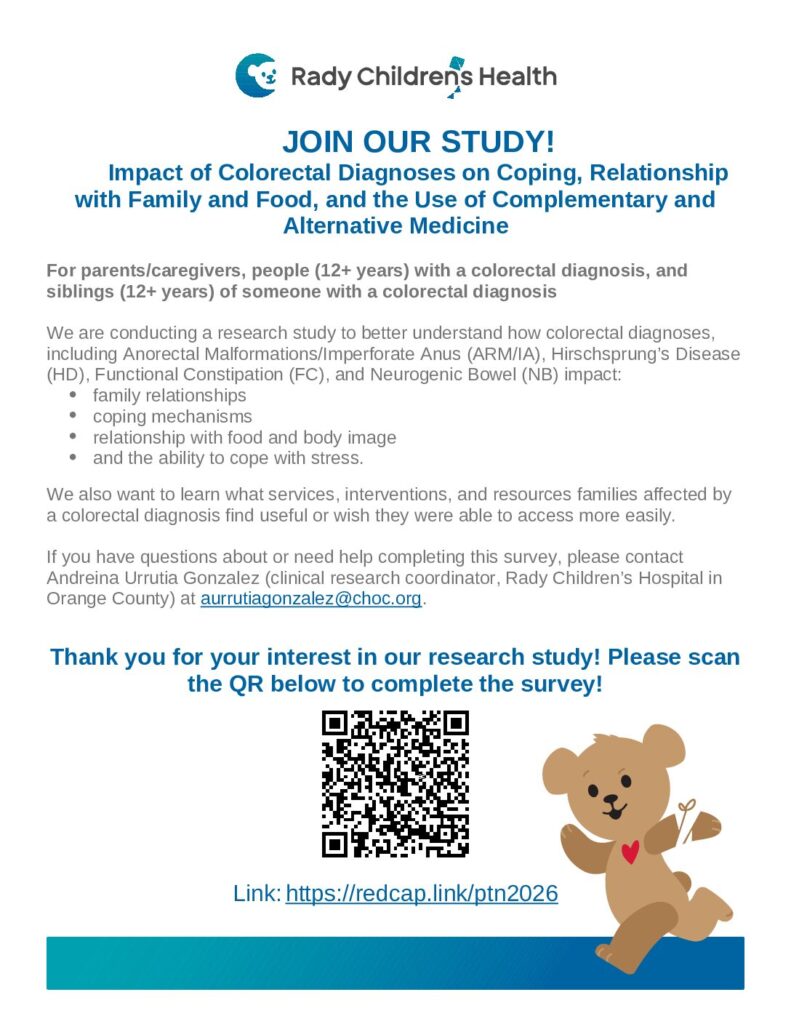
Families living with colorectal diagnoses often navigate challenges that extend far beyond medical care. A new research study is seeking to better understand how conditions such as Anorectal Malformations/Imperforate Anus (ARM/IA), Hirschsprung’s Disease (HD), Functional Constipation (FC), and Neurogenic Bowel (NB) affect everyday life.
The study explores how these diagnoses may influence family relationships, coping mechanisms, relationships with food and body image, and the ability to manage stress. Researchers also want to learn which services, interventions, and resources families find most helpful—and what support they wish were easier to access.
Who Can Participate?
The study is open to:
- Parents and caregivers
- People age 12 and older with a colorectal diagnosis
- Siblings age 12 and older of someone with a colorectal diagnosis
By sharing their experiences, participants can help researchers better understand the broader impact of colorectal diagnoses and identify opportunities to improve support and resources for affected families.
Interested in participating? Scan the QR code on the study flyer below or visit the survey link provided by the research team. Questions or assistance with the survey can be directed to Andreina Urrutia Gonzalez, Clinical Research Coordinator at Rady Children’s Hospital in Orange County.